
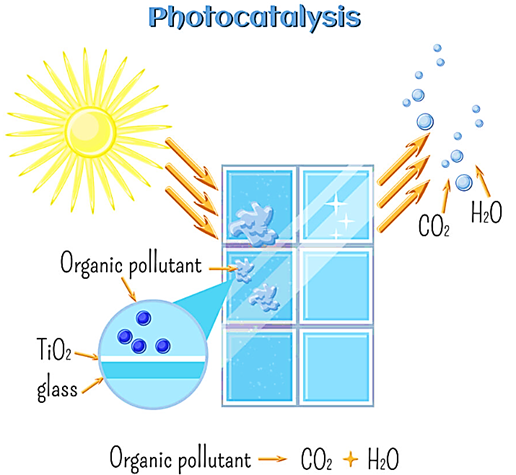
When exposed to light, a semiconductor material known as a photocatalyst accelerates a chemical reaction, thereby transforming light energy into chemical energy. Excellent materials known as photocatalysts may readily transform solar energy for use in oxidation and reduction processes. Pollutant removal from air and water, water splitting to produce H2, odor management, and bacterial inactivation are just a few of the applications for photocatalysts.
It functions similarly to a spark that never goes out. Do you know what’s cool about it? When light, usually UV or visible light, is absorbed by a photocatalyst, electrons leap to a higher energy level (conduction band), creating a “hole” in the valence band. By separating the excited electrons and holes, the catalytic action is increased and the chance of rejoining is decreased. The intended chemical change is brought about by the electrons and holes taking part in oxidation-reduction (redox) reactions with nearby molecules. At the conclusion of the reaction, the photocatalyst is unaltered and prepared to continue the procedure.
The use of visible light-responsive photocatalytic technology in water treatment has the potential to boost purification effectiveness and expand the water supply by safely utilizing unconventional water sources.
What’s the best part? There is no change in the photocatalyst. As long as there is light, it continues to function. Photocatalysts are transforming our understanding of energy, pollution, and even cleaning. These materials can degrade dangerous compounds by triggering chemical reactions with light, usually only sunshine. TiO₂, or titanium dioxide, is one of the most well-known photocatalysts. Its electrons are stimulated by light and initiate a process that can destroy microorganisms or disintegrate contaminants as shown in the above figure.
This technology is already present in the real world. When exposed to sunshine, certain buildings’ self-cleaning windows and tiles dissolve dirt and filth. Photocatalysts are used by air purifiers to eliminate dangerous gases and eradicate bacteria. More efficiently than filters alone, they aid in the destruction of hazardous chemicals and purify contaminated water.
https://www.sciencedirect.com/topics/materials-science/photocatalysts
