
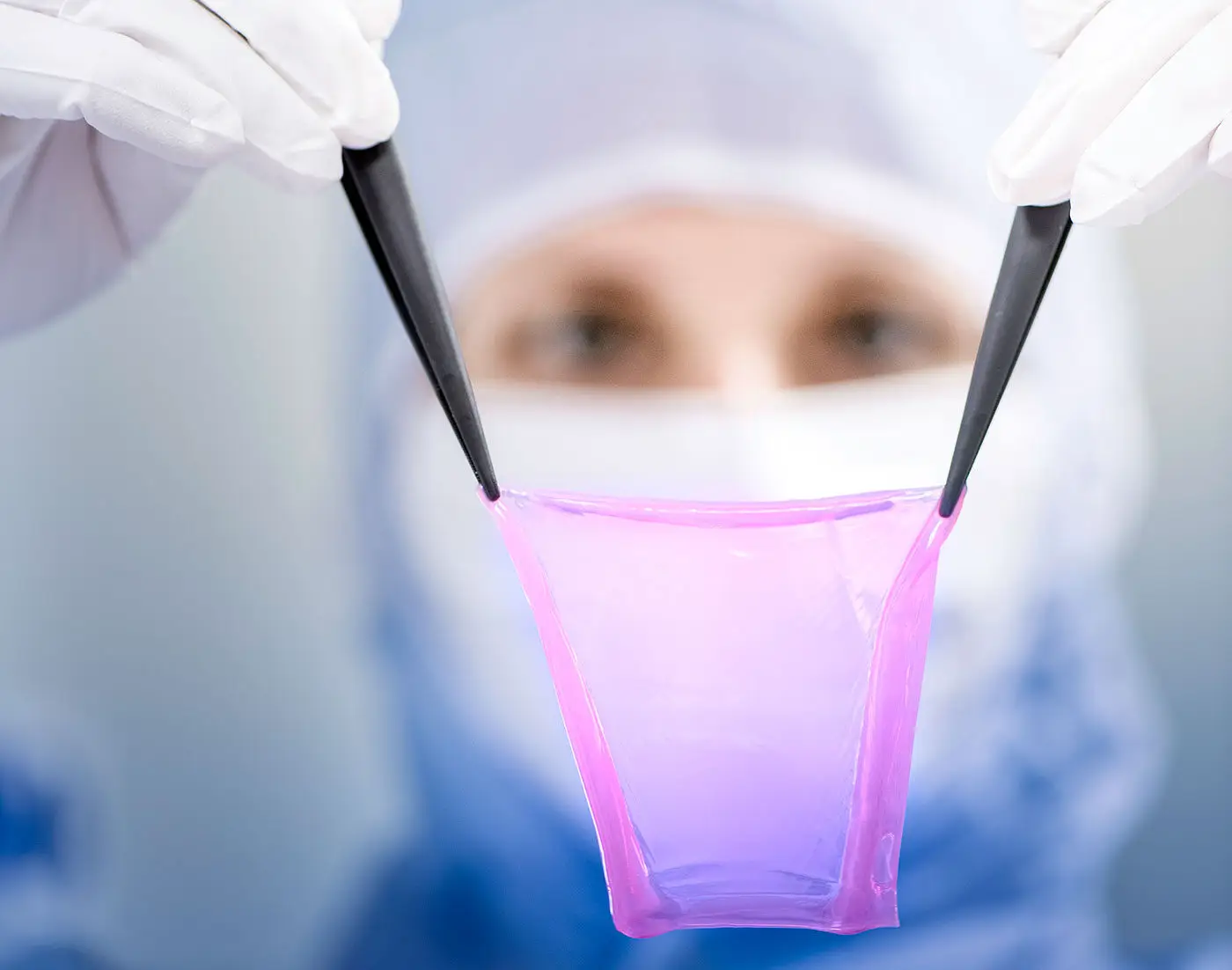
Imagine a future where a serious injury to your face could be repaired with tissue grown from your own cells, or where a simple pill could reprogram your immune system to combat a chronic disease – eliminating the need for lifelong medication. This vision of the future is not far off, thanks to the advancement of bioengineered tissue. Bioengineered tissues are synthetic materials designed to mimic the structure and function of natural tissue, offering a groundbreaking solution for wound healing, tissue repair, and even organ regeneration. These tissues can be customized to meet the specific needs of each patient, using their own cells to avoid rejection and improve recovery times. Through innovative techniques like 3D printing and electrospinning, scientists are pushing the boundaries of what is possible, creating functional, personalized tissues to restore and enhance the body’s natural abilities.
Application:
- This technology can help fix or replace damaged body parts, like skin for burn victims, cartilage for bad joints, or blood vessels. It’s also really useful for studying how cells work together, how medicines affect the body, and how they can be used to treat diseases. Scientists can use it to figure out what causes diseases and find new ways to treat them. Plus, it helps test if drugs work and if they’re safe for people.
Advantages
- Improved biomimicry: Replicate the physiological behaviours, cellular heterogeneity, gene expression, and structural architecture of human tissues better than 2D cultures.
- Complex cellular composition: Contains multiple differentiated and functionally relevant cell lineages, allowing them to better mimic organs and tissue.
- Controlled build-up: Enable structured development of tissues such as bone, vascular endothelium, visceral smooth muscle, and lung epithelium.
- High-throughput capabilities: Can be used in high-throughput studies and screening applications.
- Higher reproducibility: Generally considered more consistent and reproducible across studies than other 3D culture models (e.g., organoids).
- Improved culturing conditions: Integration of physical stimuli in the maturation process, such as shear flow, hydrostatic pressure, peristalsis, and enhanced nutrient supply.
Limitations
- Complexity: Often lack the full spectrum of cell types and structural complexity found in natural tissues.
- Vascular network challenges: Difficulty in creating a functional blood vessel network limits size and functionality.
- Cost: High production costs limit accessibility and application.
Additional References:
