
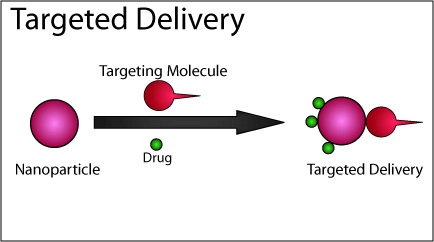
A new discipline called “nanomedicine” is applying the principles and methods of nanoscience to medical biology, preventing illnesses, and treatment. It involves the use of materials of nanoscale dimensions, such as actuation materials in living cells, and nanosensors for delivery, treatment, and sensor applications. For instance, a technique based on nanoparticles has been created that combines the imaging and treatments used for the detection of cancer.
Target-specific drug delivery systems are often designed with metallic, organic, inorganic, and polymeric nanostructures such as liposomes, dendrimers, and micelles in mind. These nanoparticles are specifically used to mark medications with low solubility and reduced absorption capacity.
Liposomes are one of the most researched drug carrier systems and are utilized in the pharmaceutical and cosmetics industries to transport a variety of compounds. Since their membrane structure is similar to that of cell membranes and since it makes it easier to incorporate pharmaceuticals into them, they are thought to be superior vehicles for drug delivery. Additionally, it has been demonstrated that they stabilize medicinal substances, enhance their biodistribution, work with both hydrophilic and hydrophobic medications, and are both biodegradable and compostable.
Amphiphilic block copolymers self-assemble to produce polymeric micelles, which are nanoscale carriers with hydrophilic shells for stability and bioavailability and hydrophobic cores for poorly soluble medications. They are made by selective precipitation or direct dissolution, loaded using techniques like solvent evaporation or dialysis, and targeted either actively by binding ligands or monoclonal antibodies or passively via stimuli-responsive release. Applications include ocular medication delivery and cancer treatment.
Ionic or covalent bonding and physical adsorption can be used to bind drugs to gold nanoparticles (AuNPs), allowing for regulated delivery and release that is activated by light activation or biological cues. Despite their limited application in medication delivery, silver nanoparticles are well-known for their antibacterial qualities. To achieve 97% in vitro release of ornidazole, for instance, some scientists created a spongy polyacrylamide/dextran nanohydrogel hybrid with covalently attached silver nanoparticles. Through the use of external triggers like light, heat, magnetic, ultrasound, pH, and ionic strength, stimuli-responsive nanocarriers can regulate drug release profiles, improving dose control and targeting accuracy.
https://jnanobiotechnology.biomedcentral.com/articles/10.1186/s12951-018-0392-8
